

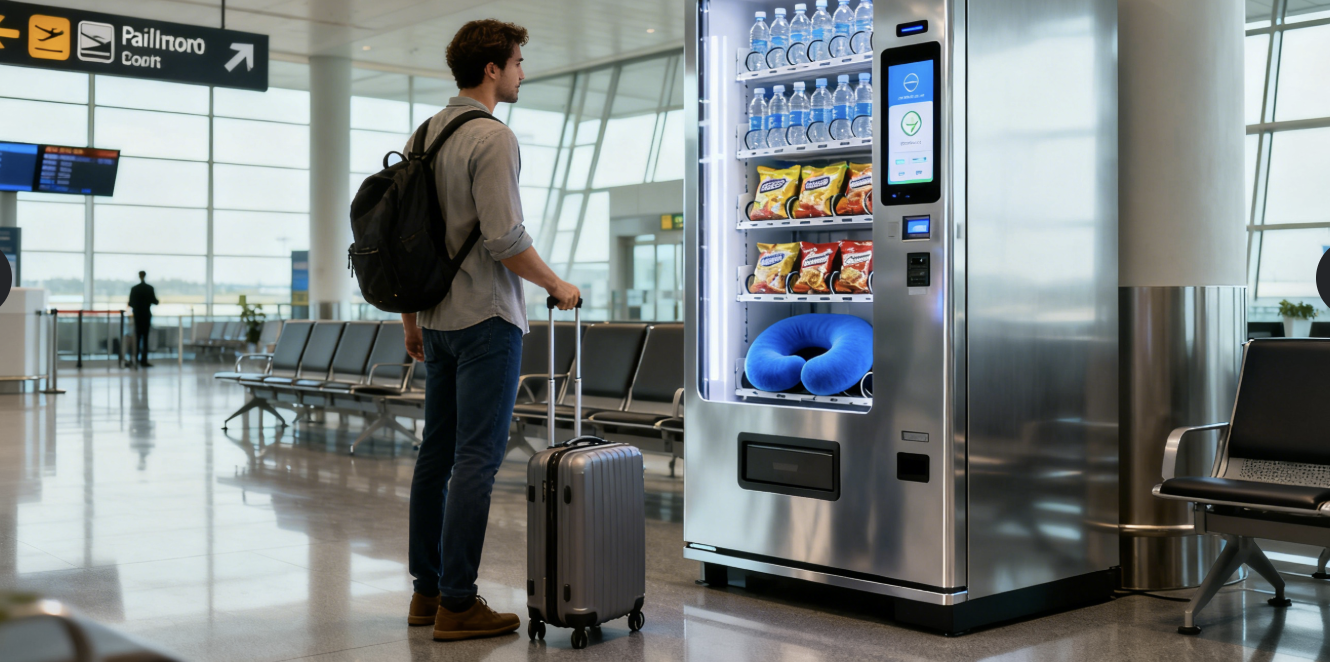
The U.S. vending machine market is in a critical phase of structural growth. According to a report released by Grand View Research in August 2025, the market size had reached $$1.502 billion** in 2024 and is projected to climb to *$$1.995 billion by 2033, with a stable compound annual growth rate (CAGR) of 3.2% during the period 2025-2033. Although this growth curve seems gentle, it hides a structural breakthrough point—intelligent vending machines are growing much faster than the industry average, becoming the core driver of market expansion.
From the perspective of segmented markets, traditional categories still dominate but have limited growth rates. In 2024, beverage vending machines became the largest segmented category with a 38.08% revenue share, among which beverage machines deployed in the manufacturing sector were the most intensive, accounting for 35.83%. However, intelligent vending machines have shown even more outstanding performance: the North American intelligent vending machine market reached $$801 million in 2024, increased to$$904 million in 2025, and is expected to soar to $$2.381 billion by 2033, with a high CAGR of 12.87%. Alone in the U.S. market, the size of intelligent vending machines had hit$$313 million in 2024 and is anticipated to exceed $692 million by 2032, with a growth rate (11.99% CAGR) more than three times that of the overall market.
II. Intelligent Vending Machines: The Fastest-Growing Core Driver
The explosive growth of intelligent vending machines is no accident; it is the result of the joint action of technological iteration, changes in consumption habits, and upgrades in business efficiency. Its growth logic can be analyzed from three dimensions:
1. Payment and Interactive Technology: Restructuring the Consumption Experience
The "contactless demand" in the post-pandemic era continues to gain momentum, driving cashless payment to become the industry standard. Data shows that in 2024, more than 75% of vending machines in the U.S. supported cashless transactions, among which the penetration rate of cashless payment in intelligent vending machines was close to 100%. Specifically, 72% of North American intelligent vending machines were equipped with NFC payment functions, and 55% supported QR code payment. The integration rate of mobile payment tools such as Apple Pay and Google Pay has been increasing year by year. This innovation in payment methods not only meets consumers' needs for hygiene and safety but also shortens the single transaction time by 40%, significantly improving the operational efficiency of the equipment.
2. IoT and AI: Key Means to Reduce Costs and Improve Efficiency
Intelligent vending machines have realized the transformation from "vending equipment" to "intelligent terminals" through technology integration. Currently, 45% of intelligent vending machines in the U.S. are equipped with IoT monitoring systems, and 35% are equipped with AI-driven inventory management modules. Taking brands such as Farmer’s Fridge and Chowbotics by Doordash as examples, their intelligent refrigerated vending machines can track the freshness of ingredients and consumer preferences through real-time data, improving the replenishment efficiency by 30% while reducing commodity loss by 25%. This "predictive maintenance + precise replenishment" model reduces the per-unit operating cost of intelligent vending machines by 15%-20% compared with traditional models, becoming the core driving force for attracting operators to upgrade.
3. Scene and Category Expansion: Breaking Through Traditional Boundaries
Intelligent vending machines are breaking the traditional label of "snacks and beverages" and penetrating into diverse scenarios. In 2024, 55% of intelligent vending machines in the U.S. were concentrated in airports, commercial centers, and schools, and another 30% focused on healthy food and beverage categories. In the office scenario, intelligent vending machines have begun to provide ready-to-eat meals and hygiene products; in the medical scenario, the proportion of intelligent terminals that can sell PPE kits and basic medicines has reached 15%. This expansion of scenarios and upgrading of categories are in line with the demand of U.S. consumers for "instant healthy products"—the adoption rate of healthy vending machines has achieved an annual growth of 20%.
III. Future Trends: Technological Deepening Coexisting with Challenges
The market growth from 2025 to 2033 will show a pattern of "overall stability and intelligent leadership", but it still needs to address multiple challenges:
1. Continuous Strengthening of Growth Drivers
From the demand side, the process of urbanization and the demand for "instant retail" will continue to be released. The proportion of the urban population in the U.S. has exceeded 82%, and the demand for equipment deployment in high-frequency scenarios such as transit hubs and co-working spaces has increased by 8% annually. From the technology side, the integration of AI and IoT will be further deepened: it is expected that by 2030, 70% of intelligent vending machines will have personalized recommendation functions, 50% will realize dynamic pricing, and operational efficiency is expected to be improved by another 25%.
2. Unignorable Industry Constraints
High initial costs remain the main obstacle. The hardware and software investment of intelligent vending machines is 3-4 times that of traditional models. Coupled with subsequent connectivity and cybersecurity maintenance costs, the willingness of small and medium-sized operators to upgrade is limited. In addition, market competition will intensify concentration—the market share of the top five global enterprises is expected to increase from 65% in 2025 to 72% in 2030, and local small and medium-sized brands in the U.S. need to rely on scene innovation to break through.
3. Structural Opportunities in Regions and Categories
In terms of regions, the density of intelligent vending machines in first-tier cities such as New York and Los Angeles has reached 12 units per 10,000 people, while that in midwestern cities is still less than 3 units, indicating huge incremental space in the sinking market. In terms of categories, vending machines for healthy food (such as organic salads and sugar-free beverages) and niche products (such as electronic accessories and cosmetic samples) have the fastest growth rates, with CAGRs of 13.09% and 12% respectively, and are expected to become new growth engines.